Britain’s previous Prime Minister, David Cameron, first mentioned Brexit in a speech on January 23, 2013. After his reelection in 2015, Cameron made a promise of change regarding Britain’s membership in the EU. On June 23, 2016, a referendum (public cote) was held. A very narrow majority voted to leave the European Union. A day later, David Cameron resigned. David Cameron was replaced by current Prime Minister Theresa May. Before being sworn in as Prime Minister, Theresa May served as the Secretary of State for the Home Department. On July 13, 2016, May became the second Prime Minister in all of British history. Because Cameron had resigned, May was tasked with the job of ushering Britain through the back-breaking process necessary to leave the EU.
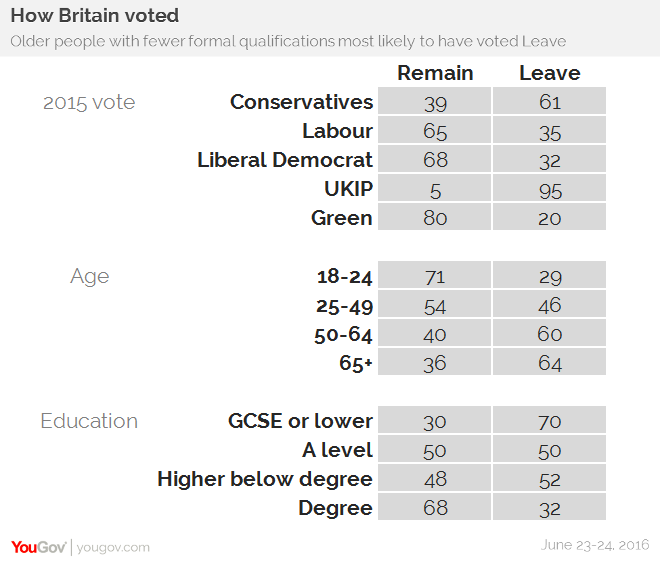
Although Brexit was obviously a highly discussed topic among British politicians, the question is what sort of people voted in the Brexit decision. The UK has voted to leave the EU by 52% to 48%, but who made up that majority?
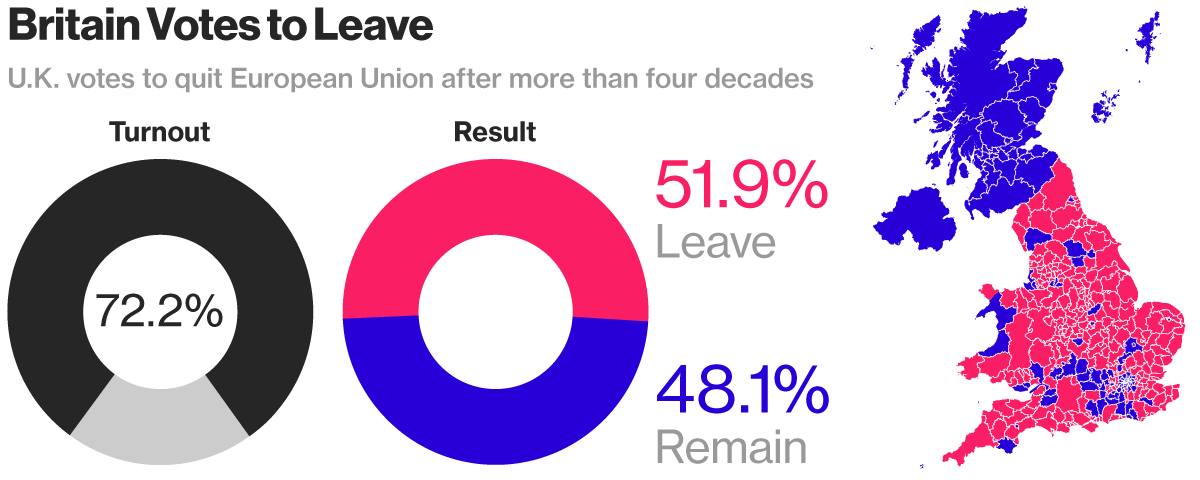
In the UK, which is composed of England, Northern Ireland, Scotland, and Wales, voted to leave the EU. 53.4% of England voted to leave. 44.2% of Northern Ireland voted to leave. 38.0% of Scotland voted to leave. 52.5% of Wales voted to leave. 61 % of males aged 18 to 24 years voted for the UK to remain within the EU. 61 % of males in the 50 to 64 age brackets voted in favor of a “Brexit”. 80% of women between the ages of 18 and 24 voted to stay in the EU.
Nearly three times as many people thought the government was handling things badly Since the cabinet reached the Chequers agreement on how to handle the UK’s future relationship with the EU, that ratio has increased.Voters who wish to leave the EU have become much more critical, with only about 20% thinking the government is doing well, while 70% feel it is doing badly.
Majority voters think that Brexit will be bad for the economy, similar to how they felt before the referendum. According to ICM’s most recent poll, 44% of people think Brexit will be bad for the economy. That is an almost identical proportion to the 43% who held that view 18 months ago.
Immigration was the main issue for many of those who voted to leave the EU in 2016. However, some recent polling has suggested that the level of concern has declined. The proportion of people who think the rules on immigration should be the same for EU residents as those from elsewhere in the world fell from 74% before the vote to 59% now.
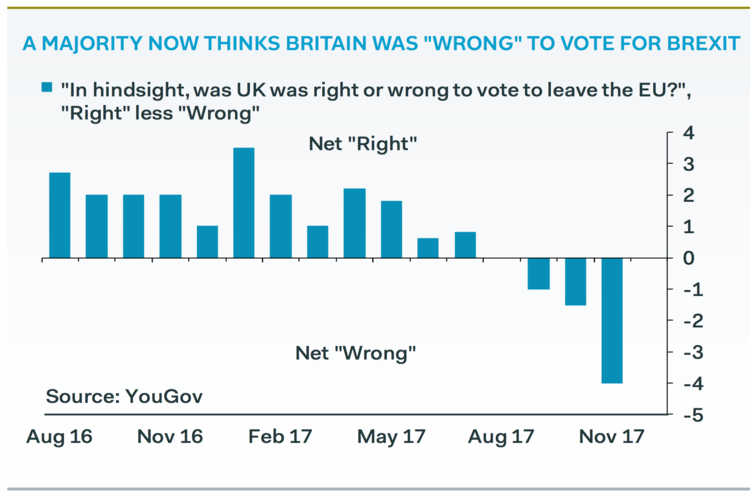
Recent polls that asked people how they would vote if the referendum question was asked again often found a small majority wanted to leave the EU. Ever since, nearly every poll has found a small majority saying that they would vote to stay in the EU. However, there is no consistent evidence suggesting that support for staying in the EU has increased. The UK remains the same when regarding Brexit.
Overall, the majority of British voters that had voted to leave the EU have backpedaled. Although there will always be those strong supporters, Britain has begun to question whether or not not Brexit truly is worth the hassle the nation has been dragged through.
In 2015, Angela Merkel (Chancellor of Germany) began letting in large numbers of refugees into the country of Germany. Although Germany was admitting the immigrants, these immigrants had full rights to travel anywhere in the EU once admitted. Other members of the EU, especially Britain, felt that they did not have control or a choice over the immigration situation. Britain speculated that leaving the EU would give the country more control over their borders, terrorism, and even loss sovereignty to the EU.
According to The Economist, British areas that saw increases of over 200% in foreign-born population between 2001 and 2014 saw a majority of voters vote to leave (in 94% of cases). Research suggests that areas that received migration from Eastern Europe after the accession of 12 mainly Eastern European countries to the EU in 2004 saw significant growth in support for United Kingdom Independent Party, which mostly voted to leave the EU. Areas that saw large rises immigration between 2004 and 2011 were a large part of the majority that voted to leave the EU.
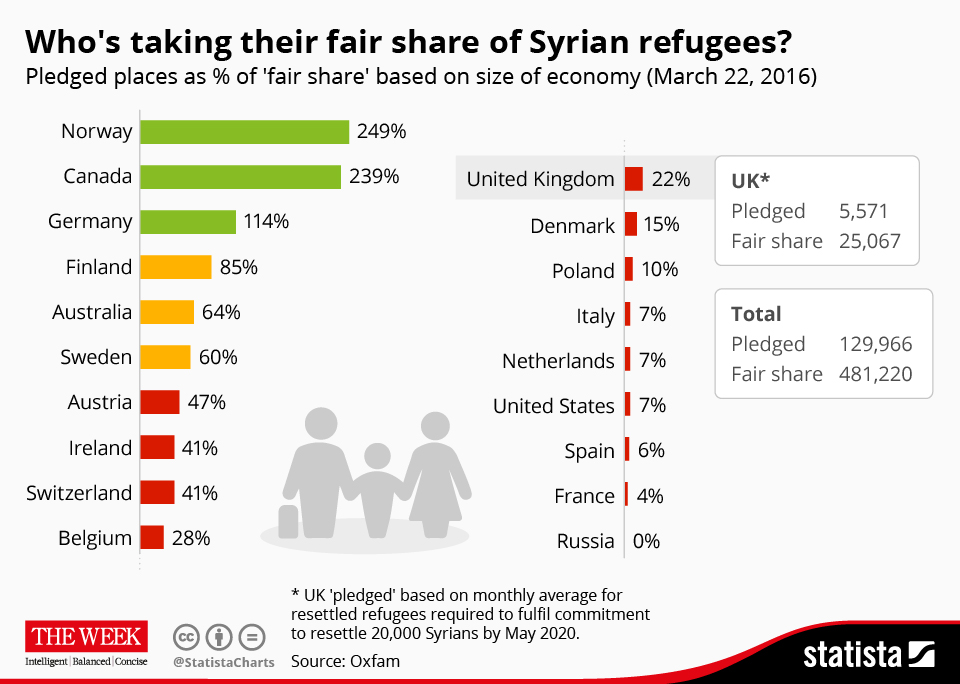
Studies concluded that 45% of Britain, at the time of the vote, regarded the immigration of refugees from the Middle East as Britain’s top issue. Although it was regarded as the country’s main issue, Britain seemingly only allowed in a fraction of the refugees of the other nations around the world.
Although immigration seems to no longer be an issue in Great Britain, there was a fear that immigrants would rule the country.Before Brexit, it was estimated that around 5,000 to 13,000 immigrants would enter the country. 129,000 arrived instead. Britain assumed the number would only grow larger, and as more time passed, the more immigration pushed Britain to leave the EU.
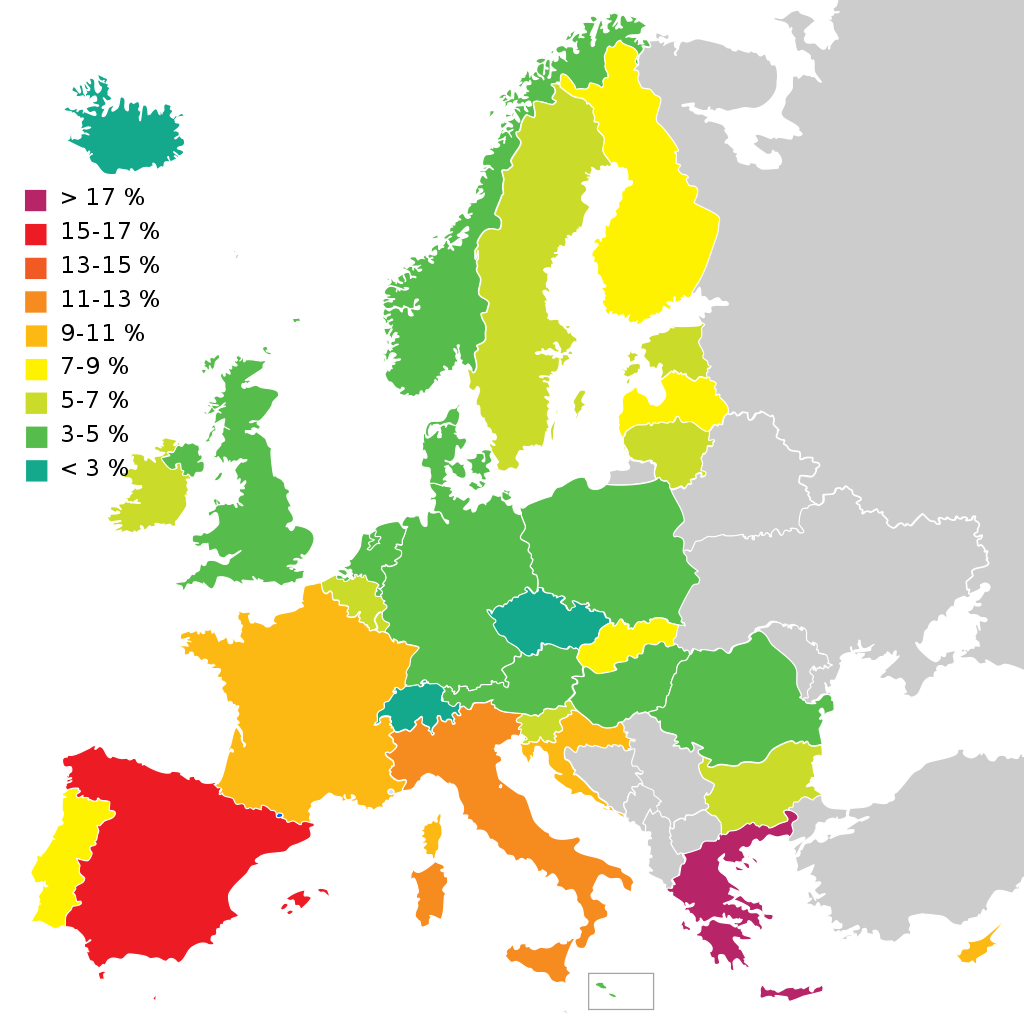
On June 23, 2016, Britain voted to leave the European Union once and for all. While so many factors lead up to that decision, there were a select few that were the foremost events. One of these events was the Financial Crisis of 2008. Because of the shared currencies between the EU nations, Britain began inheriting the effects of failing economies. Countries in the “eurozone” feel into a deep recession. While the normal response to a recession would ultimately be to expand the money supply to promote economic growth, the EU took a different approach. In 2011, the interest rates were raised. The recession left the countries with higher rates of unemployment, and higher financial burdens. Greece, in particular, hit record breaking unemployment rates.
CC BY-SA 2.5 File:EU Unemployment.svg Created: 27 June 2014
The Financial Crisis of 2008 not only impacted the nations directly causing the recession, but other members of the EU as well. Similar to how the more financially stable Americans pay taxes to support the Underclass Americans, the richer countries within the EU were expected to support the financially burdened countries. Although any taxpayer is reluctant to provide aid to others, they are generally more reluctant to provide aid to other countries. When one country’s ecomony failed, every country also using the euro was impacted.
To Great Britain, the potential for another Financial Crisis seemed too dangerous. The risk of a failed economy because of a financial crisis occurring in another country was just enough to push the majority of Britain to vote to leave the EU.
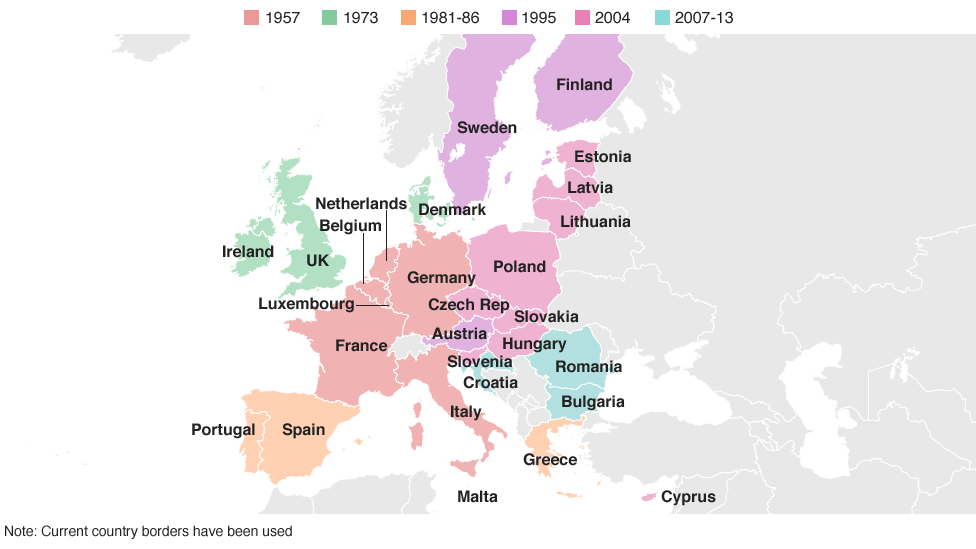
The European Union (EU) is just that: a union between the European countries. The EU stretches across Europe, from Finland to Cyprus. Shortly after World War II, France and Germany thought up a plan that would ensure an alliance between the European countries. The Netherlands, Belgium, Luxembourg, Italy, and little Malta also signed off on this plan. What started as six united countries, soon grew into an even stronger alliance amongst twenty-eight European nations. Although the EU was founded in 1957, Great Britain had not entered the EU until 1973, along with Ireland and Denmark.
The modern EU is managed by three bodies. The EU Council, being the first body, includes the Head of States from each of the 28 European nations. This body also includes the European Council President (currently Donald Tusk) and the President of the European Commision (Jean-Claude Juncker). The EU Council proposes new laws and sets the policies. The second body is the European Parliament. Their main role is to pass laws, decide on international agreements, act as a supervisory, and establish and approve the EU budget. The third body is the European Commission. Their purpose is to ensure all members of the EU remain consistent in terms of regional, agricultural, and social policies. These three bodies work to create unity by not only helping their own countries, but their fellow countries around them. To ensure peace is to ensure stability and unity amongst the European nations.
Being a member of the EU grants any citizen the freedom to work, live, and travel to other EU countries. For example, if an English citizen would want to retire in Italy, they are still entitled to their English pension and insurance. The EU creates a stronger security in the countries, thanks to its connecting and coordinated justice system. The ability to share criminal records across 28 countries creates a stronger security amongst the EU. Larger trading blocs create better import and export trading opportunities, and better prices on trade goods. Studies have shown that up to 10% of Great Britain’s employment opportunities are linked the European Union. Nineteen out of twenty-eight countries share the same currency: otherwise known as the Euro (approximately $1.12). The benefits of being a member of the EU are endless. However, for some countries, the benefits are still not enough reason to stay a member of the EU.
While some of Britain would wish to remain apart of the EU, the country has voted to leave.
Image: Bloomberg
The referendum’s results began the long and grueling process of removing the United Kingdom from the EU. While Britain acknowledges the advantages of remaining a member of the EU, it is believed that the EU is holding the United Kingdom back. Although they are one of the highest money contributors to the EU, Britain receives little in return. Great Britain’s wishes to retain its freedom, while reaping the benefits of the EU. Three years after the vote Britain still struggles with leaving the EU. Britain may have voted to leave, but it is a wonder what steps the country will take to do so.
As for right now none of Theresa May’s deal have been passed. Theresa May’s deal has been defeated Twice now and there has been given an extinction on the time to create and deal that can be approved. However Theresa May has announced that if her Brexit Deal was to passed that she will Quit from being a Prime Minister. Theresa May understand that there is a desire for new leadership and new approach in second phase of the Brexit negotiations. Theresa May has said that in exchange for her promise to step down was for the lawmaker to change their vote.
There were many votes that were apart of the decisions on what to do for Brexit and if Brexit should be an actual thing. However many say that many people did not take some of the votes seriously and that if they had know they would have voted instead of ignored it .
The first “meaningful” vote is that of the was when the Parliament rejected the 585-page treaty this was back in January. A very big reason for why it did not pass was the fact that it had a safety net arrangement know as the “Irish backstop”. It was designed to ensure that if the UK and the EU could not resolve their future trading agreements there can not be an physical broader being put up in the island of Ireland.
The second “meaningful” is that of Theresa May tried to again to have the parliament after her first vote of the worst margin defeat in the government’s history. She was hoping that she could teak the backstop so that the lawmakers in her party would reverse their votes. The fear that Brexit would not happen at all if the lawmaker kept rejecting her plan. The next thing that was up to vote was the No deal Brexit vote.
The last vote that was called was the vote for more time on the Brexit Deal. The vote is for if both deals are reject and there would be extra time needed due the fact that there would only be 15 days till the UK would exit the EU. However, even if the Theresa May’s deal is except she herself could push for extension herself. For that fact that the large amount of legislation associated with the withdrawal deal and there is not enough time for it.
Theresa May was born on October 1, 1956 and has a education from St. Hugh’s College and University of Oxford. Theresa May is a British politician that became the second woman Prime Minister in July 2016 after David Cameron as a leader of the Conservative Party. She was first named Secretary of state for home department in 2010, she was the longest-serving home Secretary in over a century she did many things like advocating limited immigrant.
In 2016 Theresa May stood with Cameron when he was opposing Brexit, in June when Cameron announced his imminent resignation after the voters chose to leave the EU. It had seemed like campaign’s chief spokesman Boris Johnson would become the new leader of the conservative party. However, after the lose of some key supporters Johnson pulled out of the race. Theresa May enter a pool of four other candidates and won many votes, after Energy Minister Andrea Leadsom pulled herself from the race she made a comment about motherhood being a good judge for a leader. She made this comment to put down Theresa May’s running due to her not having any children.
After becoming Prime Minister Theresa May pledged to see Brexit through completion. She went about her plan cautiously, but she hit a roadblock when the High Court ruled that sh could not invoke Article 50 of the Lisbon treaty which lead to the start of the negotiations on the separation of the UK and the EU, she did this without the approval of Parliament. Her government appeal of the ruling was rejected by the Supreme Court in January 2017. However, in February her bill was passed in the House of Commons but it was later called to Parliament because it needed a bigger part of the government to negation the amendment.
Brexit as suggested by the name is the British exiting the European Union. The idea of the United Kingdom leaving the union was first talked about Peter Wilding was making a speech, he however is very upset that the word he created could be the word that can be remembered as the name for the nation’s decline.
The Brexit plan was proposed in October 2015 by Prime Minster Theresa May, it was when she announced that she was planning to invoke Article 50 which means that she gave formally notice of Britain’s intention to leave the EU. However, this lead to a speech given in January 2017 that Theresa May lists all the major negotiations for the UK. The list included free trade, security, immigration and worker’s rights. In February 2017 the UK government publishes the white papers which states what direction the UK will be taking in the negotiations.
On March 29, 2017 Theresa May triggers Article 50 which begins the process of the UK leaving the EU and that left two years for a negotiation of a deal and for the UK to leave. In April Theresa May announced that there would be a snapped election June 8, in which she loses the majority vote. Later that month when decision about the process and terms of Brexit leading to a deadlock between the two sides. Theresa May tries to break the deadlock in September by talking about keys points that are needed for Brexit to succeeded.
In March 2018 the EU and UK have released statements of agreement on several key issues after the UK leaves the EU including the status of EU citizens in the UK. Later in November the official withdrawal agreement was released this agreement however was meet with criticism from many including those in Theresa May’s own party. In December 2018 Theresa May announces the vote in January for the Brexit deal in Parliament. The vote however fails and parliament rejects the plan. On March 29, 2019 it was the day that the UK would leave the EU the transnational period has begun and will end in 18 months meaning the ending of the Brexit process.
 Brexit: Britain's Exit